
What do ESG and Carbon Accounting mean?
In business today, sustainability and ethical governance have become essential. Two key concepts driving this shift are Environmental, Social, and Governance (ESG) and Carbon Accounting.
ESG provides a comprehensive framework for evaluating a company’s performance beyond financial metrics, focusing instead on its impact on the environment, society, and governance structures. Meanwhile, Carbon Accounting, a subset of ESG, focuses on measuring and managing greenhouse gas (GHG) emissions, enabling companies to understand and reduce their carbon footprint.
These concepts are more than just buzzwords, they’re rapidly becoming business regularities. Companies that embrace ESG and Carbon Accounting position themselves as leaders in sustainability, attract value-driven investors and navigate regulatory landscapes with more confidence. As the world faces mounting climate challenges and social inequalities, ESG and Carbon Accounting offer businesses a roadmap to relevance and responsibility.
Understanding ESG (Environmental, Social, and Governance)
What does ESG mean?
At its core, ESG is a set of criteria used to assess a company’s commitment to sustainability and ethical practices. It goes beyond traditional financial analysis, offering investors, stakeholders, and regulators insights into how a company manages its environmental impact, social responsibilities, and corporate governance. ESG is as much about building trust and transparency as it is about addressing the global challenges of climate change, inequality, and accountability.
The Three Pillars of ESG
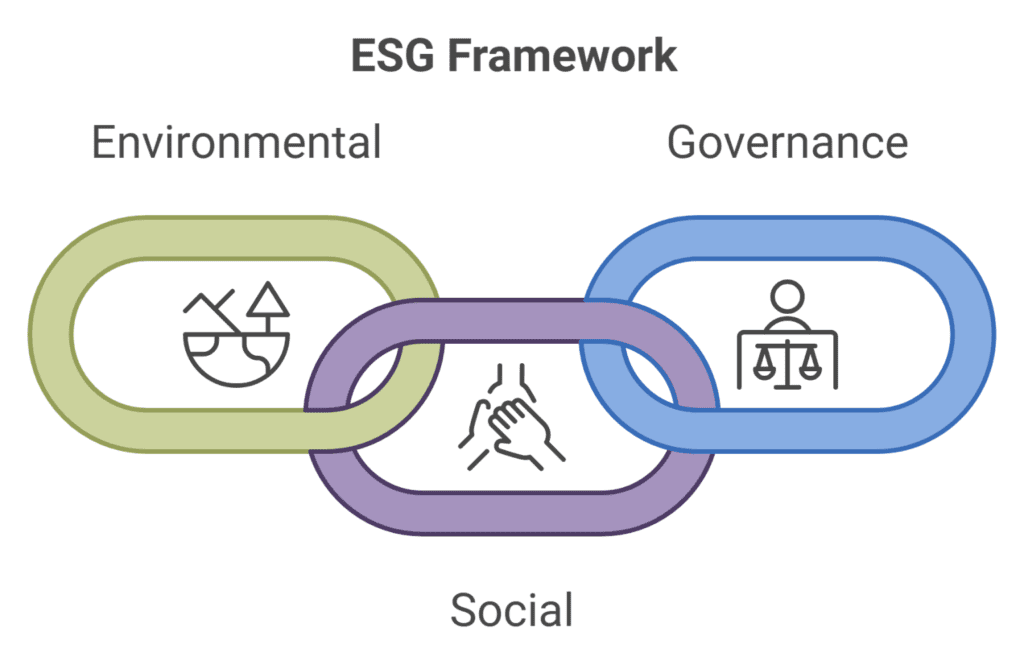
- Environmental
This pillar evaluates how a company interacts with the natural world. Key considerations include:- Carbon emissions and efforts to reduce them.
- Energy consumption and the transition to renewable sources.
- Waste management and strategies to minimise ecological harm.
Companies excelling in this area often adopt green technologies and services, aiming for carbon neutrality, showcasing their commitment to a sustainable future.
- Social
The social element addresses how a business treats its stakeholders, from employees to the broader community. Key focus areas include:- Fostering diversity, equity, and inclusion in the workplace.
- Ensuring fair labour practices and protecting human rights.
- Building strong relationships with customers, suppliers, and the communities they serve.
A socially conscious company prioritises the well-being of its people and uses its influence to contribute positively to society.
- Governance
Governance examines the systems and processes by which a company is directed and controlled. Key elements include:- Transparent leadership and accountability structures.
- Fair executive compensation practices.
- Rigorous internal controls, audits, and shareholder rights.
Strong governance ensures ethical decision-making, minimises corruption, and aligns business practices with long-term goals.
By focusing on these three pillars, ESG serves as a holistic approach to evaluating and improving a company’s overall impact, making it a cornerstone of modern corporate strategy.
What is Carbon Accounting?
Carbon Accounting is the process of quantifying and managing greenhouse gas (GHG) emissions and is a crucial subset of the broader ESG framework. By measuring emissions from both direct and indirect sources, businesses can understand their carbon footprint and take actionable steps toward sustainability.
Key Aspects of Carbon Accounting
- Measuring Direct and Indirect Emissions
Carbon Accounting involves identifying emissions across three scopes:- Scope 1: Direct emissions from owned or controlled sources, such as company vehicles or on-site energy production.
- Scope 2: Indirect emissions from purchased electricity, steam, heating, or cooling.
- Scope 3: Indirect emissions throughout the value chain, including suppliers, transportation, and product use. Accurate measurement is crucial for setting reduction targets and monitoring progress.
- Assigning Financial Values to Emissions
Carbon Accounting also ties emissions to monetary values. By assigning costs to GHG emissions, businesses can factor environmental impact into their financial decision-making. This approach highlights inefficiencies and uncovers opportunities for cost savings through sustainable practices.
Tracking and Reporting Over Time
A robust Carbon Accounting system, or an ongoing carbon reduction plan from working with a sustainability consultancy, enables organisations to monitor their emissions consistently, ensuring transparency and accountability. Regular tracking supports compliance with regulations, improves stakeholder communication, and encourages continuous improvement in sustainable performance. businesses can understand their carbon footprint and take actionable steps toward sustainability.

The Importance of Carbon Accounting
Carbon Accounting isn’t just about numbers, it’s a strategic tool for addressing one of the most pressing challenges of our time: climate change. Here’s why it’s vital for businesses:
- Environmental Impact and Carbon Footprint Reduction
Understanding their carbon emissions empowers companies to identify areas of high environmental impact. By targeting these areas, businesses can reduce their carbon footprint, contribute to global sustainability goals, and demonstrate environmental stewardship. - Regulatory Compliance
With governments worldwide introducing stricter emissions reporting requirements, Carbon Accounting ensures businesses can meet these obligations. Proactive compliance not only avoids legal penalties but also enhances a company’s reputation as a responsible corporate citizen. - Responding to Investor and Stakeholder Expectations
ESG performance, including Carbon Accounting, is a key consideration for investors, customers, and partners. Transparent carbon reporting builds trust and positions companies as leaders in sustainability, attracting value-driven stakeholders and competitive advantage. - Risk Management
Climate-related risks, ranging from regulatory changes to physical threats like extreme weather, can disrupt operations and erode profits. Carbon Accounting helps businesses identify and mitigate these risks by developing strategies that align with long-term resilience and sustainability.
By embracing Carbon Accounting, businesses not only fulfil their responsibilities to the planet, but also unlock opportunities for growth, innovation, and enhanced stakeholder relationships. It’s a win-win approach to navigating today’s complex environmental and economic challenges.
Carbon Accounting Methods
Effective Carbon Accounting relies on robust methodologies to ensure accurate measurement and reporting of emissions. Two primary methods are commonly used:
- Spend-based Method
This approach calculates emissions by multiplying the economic value of goods or services by relevant emissions factors. For example, if a company spends a certain amount on manufacturing materials, it can estimate the associated emissions based on industry-average data.- Advantages: Straightforward and quick to implement, especially for organisations without detailed operational data.
- Limitations: Less precise as it relies on generalised emissions factors rather than specific activity data.
- Activity-based Method
The activity-based method calculates emissions based on detailed activity data, such as fuel consumption, electricity usage, or travel distances. This approach uses specific emissions factors tied to the activities being measured. At 5D Sustainability, we use the activity-based method because it provides much more accurate data in comparison to spend-based, and gives clients the chance to discuss their business needs with real people, rather than using a digital platform.- Advantages: Provides a higher level of accuracy and insight into emissions sources.
- Limitations: Requires comprehensive data collection and more sophisticated analysis. At 5D Sustainability, we hold a data collection call with you to gather data, we can do the rest from there! Book in an initial call today.
By selecting the appropriate method, or combining both, companies can tailor their Carbon Accounting approach to their needs and resources while ensuring meaningful insights into their carbon footprint.
Conclusion
ESG and Carbon Accounting are essential components of modern business strategy. ESG provides a holistic framework for evaluating sustainability and ethical practices, while Carbon Accounting offers a focused lens for managing greenhouse gas emissions. Together, they empower companies to understand their environmental impact, build trust with stakeholders, and navigate an increasingly complex regulatory landscape.
By adopting these practices, businesses can:
- Enhance their sustainability performance.
- Meet growing expectations from investors, customers, and regulators such as winning tenders.
- Position themselves as leaders in the global fight against climate change.
The time to act is now. Whether you’re just starting your journey or looking to refine your ESG and Carbon Accounting practices, the people and methodologies are readily available. Take the first step toward a more sustainable future, because the actions we take today will define the world of tomorrow. Get in touch to find out how 5D Sustainability will help your business thrive.
ESG & Carbon Accounting FAQs
- What is the difference between ESG and Carbon Accounting?
ESG (Environmental, Social, and Governance) is a broad framework used to evaluate a company’s sustainability and ethical impact across three main pillars: environmental responsibility, social engagement, and corporate governance. Carbon Accounting, on the other hand, is a subset of ESG that focuses specifically on measuring and managing a company’s greenhouse gas emissions, helping to track and reduce its carbon footprint. - Why is Carbon Accounting important for businesses?
Carbon Accounting is crucial because it helps businesses understand and reduce their carbon emissions, ensuring they meet regulatory requirements, manage climate-related risks, and align with stakeholder expectations, not to mention beating the opposition to winning tenders by having a clear carbon reduction plan. By accurately tracking emissions, companies can identify areas for improvement, enhance their sustainability performance, and build trust with customers and investors. - What are the two primary methods used in Carbon Accounting?
The two primary methods in Carbon Accounting are the spend-based method, which calculates emissions based on economic values, and the activity-based method, which uses specific activity data (such as fuel consumption or electricity usage) to determine emissions. The activity-based method generally provides more accurate results, while the spend-based method is easier to implement when detailed data is unavailable. - How can a business start implementing ESG and Carbon Accounting practices?
To begin, businesses should assess their current sustainability efforts and determine the areas where they can make the most impact. They can start by measuring their carbon footprint using one of the Carbon Accounting methods, and then implement strategies to reduce emissions. Additionally, investing in ESG reporting software, setting clear goals, and regularly reviewing progress are key steps in building a robust ESG strategy. Need help with Carbon Footprinting? Look no further.
Get in touch at info@5dsustainability.co.uk or book a call to start the conversation.